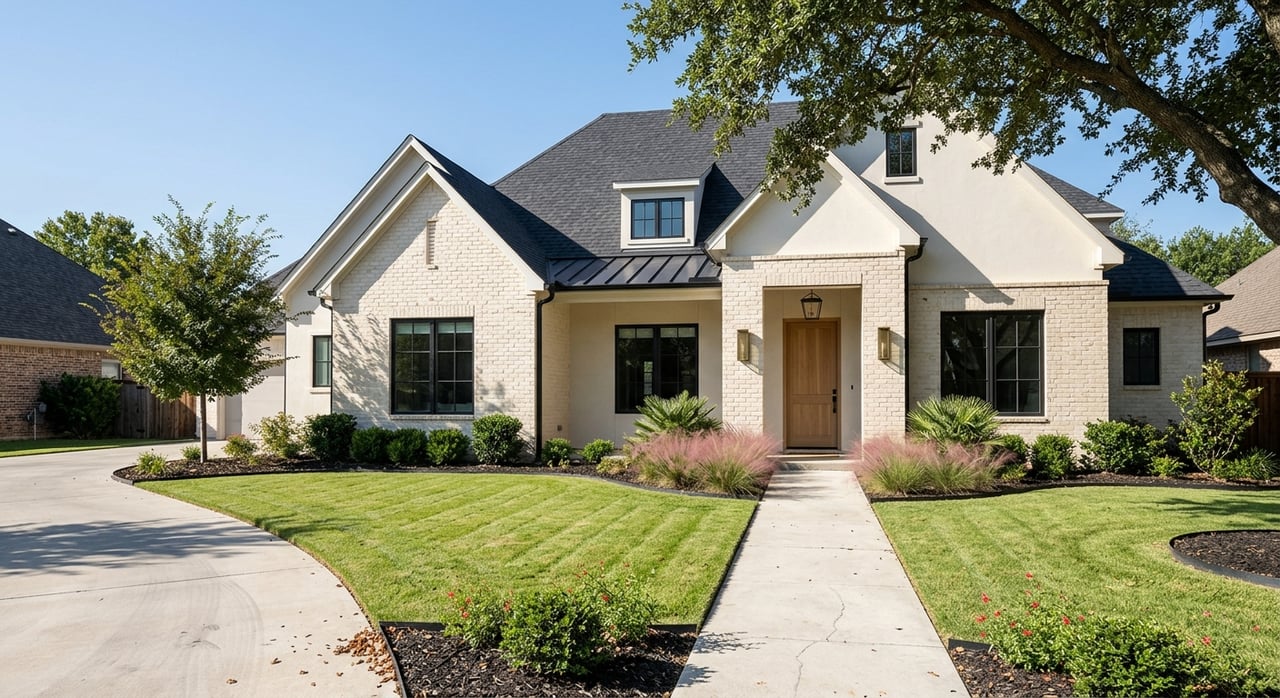
What It’s Like To Live In Sherman, TX Today
If you are wondering whether Sherman still feels like a small North Texas city or is becoming something bigger, the honest answer is both. Sherman is in a visible growth cycle, and you can feel that in its expanding infrastructure, active development, and changing housing options. If you are thinking about moving here, relocating within North Texas, or buying before the market evolves further, it helps to understand what daily life really looks like. Let’s dive in.
Sherman had an estimated population of 52,417 as of July 1, 2025, and its corporate limits span 48.2 square miles. It sits about 65 miles north of the Dallas-Fort Worth Metroplex, which gives you some separation from the busiest parts of the region while still keeping you connected.
What stands out most right now is momentum. City officials tie major infrastructure work to growth associated with Texas Instruments' Sherman fab and a planned GlobalWafers facility, and Texas Instruments says its first Sherman fab began production in December 2025. That means Sherman is not standing still. It is a city adjusting in real time to new demand, new residents, and new investment.
For many residents, downtown Sherman is part of everyday life. The city describes downtown as home to a majority of Sherman’s locally owned shops, boutiques, and restaurants, which gives the area a distinct local feel instead of a one-note chain retail experience.
Downtown has also become easier to use. After the city ended paid parking in May 2025, the area includes hundreds of on-street and off-street parking spaces. If you like the idea of being able to run errands, meet friends, or grab dinner without overthinking parking, that is a meaningful quality-of-life detail.
Sherman also offers a broad set of basic city services and amenities. The city provides police, fire, ambulance, sanitation, a library, water and sewer, streets, a municipal airport, recreation, tourism, and youth and senior programs. That kind of service base matters because it supports day-to-day convenience as the city grows.
One reason Sherman appeals to a wide range of buyers is that it offers more than just rooftops and roads. The city says it has 16 parks and 3 facilities, which gives you several ways to spend time outdoors close to home.
Fairview Park is one of the more active recreation spots, with a two-and-a-half-mile walking trail, pickleball, tennis, a dog park, and The Splash. Herman Baker Park offers a different setting, with a lake and trail environment that feels more natural and tucked away. If outdoor time is part of how you recharge, Sherman gives you options without requiring a long drive.
Sherman includes educational and health care resources that shape everyday living. Austin College has been in Sherman for 150 years and reports an $83 million annual contribution to the local economy, which adds another layer to the city’s identity and local activity.
For public education, Sherman ISD reported 7,487 students as of October 31, 2025. The district also opened three new elementary campuses for the 2025-26 school year and redrew attendance zones to reflect current and anticipated growth. That tells you the city is not only growing in theory. Its public infrastructure is actively responding.
Health care access is another practical plus. Sherman Medical Center is inside the city, and Texoma Medical Center is just over the city line, giving residents nearby options for care.
If you are moving from a denser urban area, it is important to set expectations clearly. Sherman remains car-oriented, and the city’s comprehensive plan says the car will remain the primary form of transportation for many residents.
That said, the driving experience is still manageable for many households. Census data show a mean commute time of 23.2 minutes, which can feel relatively reasonable compared with longer drive times in larger metro areas. For buyers balancing work, school, errands, and recreation, that can be a meaningful part of daily rhythm.
Street patterns also vary by area. According to the city’s plan, older residential areas tend to follow a grid pattern, while newer neighborhoods to the north and northwest use a curvilinear street layout. In practical terms, that can affect how a neighborhood feels, how traffic flows, and how directly you get from one place to another.
Growth is easier to live with when a city is actively planning for it, and Sherman is doing that now. The city maintains 200 miles of streets and about 380 miles of curbs and gutters, while its infrastructure program focuses on roadway, drainage, water, and wastewater work.
TxDOT’s Paris District also lists US 75 improvements for Sherman and Denison. In addition, TxDOT is studying whether the Dallas North Tollway could be extended to US 75 near Denison to improve regional access and relieve traffic. For current and future residents, these projects matter because they shape how easy Sherman may feel to navigate over time.
One of the most important things to know about living in Sherman today is that the housing stock is not all the same. This is not just a one-style suburban market. Local research shows a wider range of options, including single-family detached homes, attached homes, and small, medium, and large multifamily properties.
That variety can be helpful if you are in a transition season. Whether you are a first-time buyer, relocating for work, looking for a townhome or condo, or planning for a larger move-up purchase, Sherman offers more housing types than many people assume.
City-commissioned housing research from 2024 found that Sherman had more housing units than households overall, so there was no immediate citywide shortage at the time of the study. It also found that lower-cost owner housing was the tightest segment, while rental vacancies were above 9% when the study was completed.
Census data help paint a practical picture of affordability. Sherman’s owner-occupied rate is 52.7%, the median owner value is $243,500, the median gross rent is $1,324, the median mortgage payment is $1,758, and the median household income is $58,859.
Those numbers do not tell your whole story, but they do give you a useful starting point. If you are comparing Sherman with other North Texas cities, it helps to look at these figures alongside your budget, commute needs, and the kind of home you actually want to live in.
Sherman’s housing study points to some clear location-based patterns. Rental apartments are concentrated west and north of town, while downtown rentals tend to be older and smaller. The study also found that shadow-market rentals are mostly single-family detached homes east of Highway 75, and higher-value homes cluster on the west side.
New construction generally follows the perimeter of town and the arrival of new infrastructure. That means if you are looking for newer housing, you may find more options around the edges of the city rather than in its oldest core. If you prefer an established setting, older parts of Sherman may offer a different feel and street pattern.
One visible example of newer planned development is Heritage Ranch in northwest Sherman. The 439-acre project is designed to combine residential and commercial uses with parks, lakes, open space, and multiple housing types, reflecting the broader direction Sherman is heading.
The clearest way to describe Sherman today is as a transition market. It is still car-based and still actively under construction in many areas, but it also has a stronger downtown, expanding school capacity, and a broader housing mix than a typical bedroom suburb.
For some buyers, that is exactly the appeal. You are not buying into a place that feels fully built out and static. You are considering a city with established roots, local amenities, and visible signs of where it may be heading next.
That also means your strategy matters. In a market like Sherman, where infrastructure, development, and housing patterns are evolving, the right move depends on your timeline, lifestyle, and tolerance for change around you.
If you are considering a move to Sherman or weighing which part of North Texas fits your goals best, working with a steady local advisor can help you sort through the options with clarity. To talk through neighborhoods, housing types, timing, or relocation strategy, connect with Rene Burchell.
When it comes to your real estate needs, you should work with only the best. Whether it is buying, selling, renting, second homes, investing, or more, my team and I are happy to guide and advise you along the way. Contact us now!